Re:Build, the 'America's answer to Shenzhen' manufacturing accelerator that spun out Slate Auto, raises $2.1B led by General Catalyst and JPMorganChase
Re:Build, the accelerator behind Slate Auto, raised $2.1B on October 27 from General Catalyst and JPMorganChase to expand its US manufacturing network.
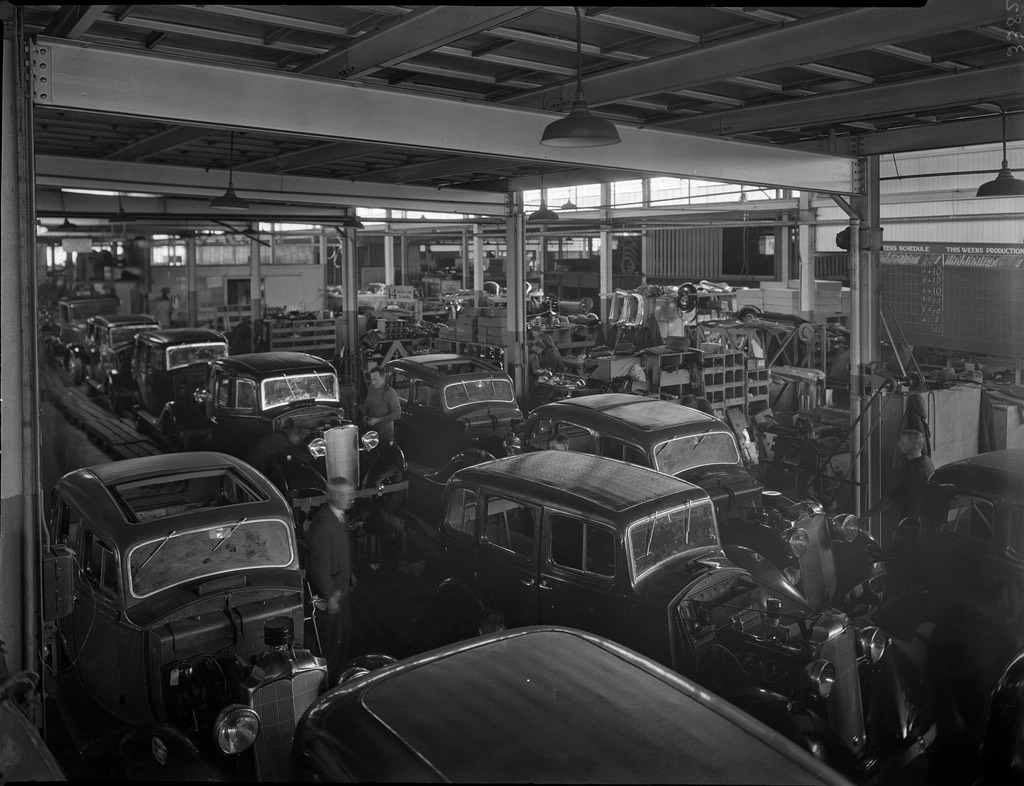
Re:Build, a Massachusetts-based manufacturing accelerator that calls itself “America’s answer to Shenzhen,” announced $2.1 billion in new funding on October 27, led by General Catalyst and JPMorganChase’s Strategic Investment Group. The company runs a platform intended to carry hardware from design through volume production under one roof, and the press release puts its current holdings at more than 2,100 US employees and over 2.4 million square feet of manufacturing capacity. It is the largest single raise in the company’s six-year history; its founding team’s cumulative total now exceeds $4 billion.
Key points
- The $2.1 billion round was announced October 27, 2026, led by General Catalyst and JPMorganChase’s Strategic Investment Group; other investors, the valuation and the split between equity and debt are all undisclosed (consistent across the official release and TechCrunch).
- The Re:Build network claims 2,100+ US employees, 2.4+ million square feet of capacity, “hundreds of products and production systems” launched over six years, and five focus industries: aerospace & defense, electrification, energy & environment, medical, and robotics & automation.
- Its incubator has produced Slate (the low-cost electric pickup), Neon Aero and Ensorcell. Slate Auto has raised roughly $1.4 billion to date, counts Jeff Bezos among its previous backers, and plans to build a sub-$25,000 pickup (from $24,950) in Warsaw, Indiana.
Background
Re:Build was founded in 2020 by Jeff Wilke, Miles Arnone and William Barker. TechCrunch’s report is the one that spells out the pedigree: Wilke ran consumer business at Amazon as its CEO; chief digital and product officer Wei Gao spent years as Jeff Bezos’s technical adviser; several other executives are also Amazon alumni. The business they built is deliberately old-economy — acquiring and joint-venturing factories, standing up capacity, and keeping design engineers inside the same organization as the production line. The press release brands the method “Manufacturing Constrained Design”: products are designed around what the line can actually do.
The company operates two motions at once. It takes end-to-end manufacturing partnerships with industrial firms, and it incubates startups in what it calls critical, underserved markets. The incubator has one proof point a hardware reader can check: Slate Auto started as an internal project in 2022 (originally named Re:Car) and was spun out in 2023. Per publicly reported figures summarized on Wikipedia, Slate has raised about $1.4 billion, including a $650 million Series C completed in mid-2026 — led by TWG Global per TechCrunch’s April report, with the company naming no other participants and previous investors including General Catalyst and Bezos’s family office; its pickup starts at $24,950, and the Indiana plant is scheduled to start production by the end of 2026. The New York Times tested an early example in July and put the promise at a $25,000-class truck.
The wider context: reshoring has become a capital theme of its own. On the same day, Anduril and Qualcomm launched their US-assembled BlueChip laptop (our coverage); last week the Commerce Department signed letters of intent worth up to $389 million with four chip companies, taking equity as a condition (our coverage). Re:Build’s round is the largest private check in that sequence so far.
The facts
Both primary materials — the official release and TechCrunch — went up the same day and agree on the core numbers. The table lists what can be checked, with the source for each row:
| Item | Figure or claim | Source |
|---|---|---|
| New capital | $2.1 billion | Release, TechCrunch |
| Lead investors | General Catalyst; JPMorganChase Strategic Investment Group | Both |
| Strategic Invest. Grp | Direct-equity arm of JPMorgan’s Security and Resiliency Initiative | Release |
| Valuation | Not disclosed | Both |
| Employees | 2,100+ in the US | Both |
| Capacity | 2.4+ million sq ft | Both |
| Cumulative funding | $4 billion+ raised by the founding team to date | Release |
| GC’s first investment | 2024 | Release |
| Jobs forecast | Tens of thousands of US jobs over the next decade | Release (company’s own) |
| Focus industries | Aerospace & defense, electrification, energy & environment, medical, robotics & automation | Release |
| Incubated companies | Slate, Neon Aero, Ensorcell | Release |
| Slate total funding | ~$1.4 billion, incl. $650M Series C (mid-2026) | Wikipedia-reported figures |
| Slate pickup | From $24,950; Warsaw, Indiana plant; production planned end of 2026 | Wikipedia-reported figures |
Three gaps matter. The $2.1 billion is company-defined “new capital” with no disclosed structure — equity, debt or a committed facility, nobody has said. There is no valuation to judge the price of the round. And the “tens of thousands of jobs” figure is Re:Build’s own decade-long forecast, carried in its release.
What others say
Wilke framed the raise in the release: “the deindustrialization of America is an economic failure and national security risk,” adding to TechCrunch that the capital lets Re:Build go “faster and further than would otherwise be possible.” General Catalyst CEO Hemant Taneja went a step further, saying that competing with China requires “platform companies that can operate at genuine scale.” The JPMorganChase voice is Todd Combs — the investor Buffett long used to scout acquisitions for Berkshire — now deploying for the bank’s strategic investment group; his line is that Re:Build built “a platform with the technical depth and operating discipline to solve complex manufacturing challenges at scale.”
TechCrunch’s Sean O’Kane has the only independent reporting so far; MSN and UA.NEWS are carrying his story. Reuters, Bloomberg, Axios and the Wall Street Journal had no verifiable coverage of their own as of October 28, and no critical reporting has surfaced — TechCrunch’s piece carries no skeptical section either. One line from CEO Arnone is worth singling out: “Most manufacturers aren’t involved in designing the products they make—we are.” That is the company drawing a line between itself and a contract manufacturer, and it stands or falls on whether a second and third company walk out of its incubator the way Slate did.
Our take
For hardware founders weighing China+1 capacity options, the concrete meaning of this round is ammunition: a platform that claims to design around line constraints now holds $2.1 billion and one validated incubation path, and Slate shows the model can produce a consumer hardware company. Shenzhen’s advantage is supply-chain density and iteration speed; Re:Build is trying to buy its way to that density by tying design, lines and capital into one organization. Whether the two are equivalent is exactly what the next companies out of its portfolio will answer.
The caveats are just as concrete. No valuation and no round structure means nobody outside the company can say how much of the $2.1 billion is equity versus debt or commitments. The jobs number is the company’s own forecast. And with no independent critical reporting yet, every number in circulation is the fundraiser’s version — read this one as an update on where manufacturing capacity is forming, less as a settled verdict.