Tesla starts FSD v15.0.1 rollout on HW4 cars with a real-time Reality View
Tesla began pushing FSD v15.0.1 (2026.38.6.11) to early-access owners on Nov 21, HW4 only, with a real-time Reality View. Its 25x claim has no baseline data.
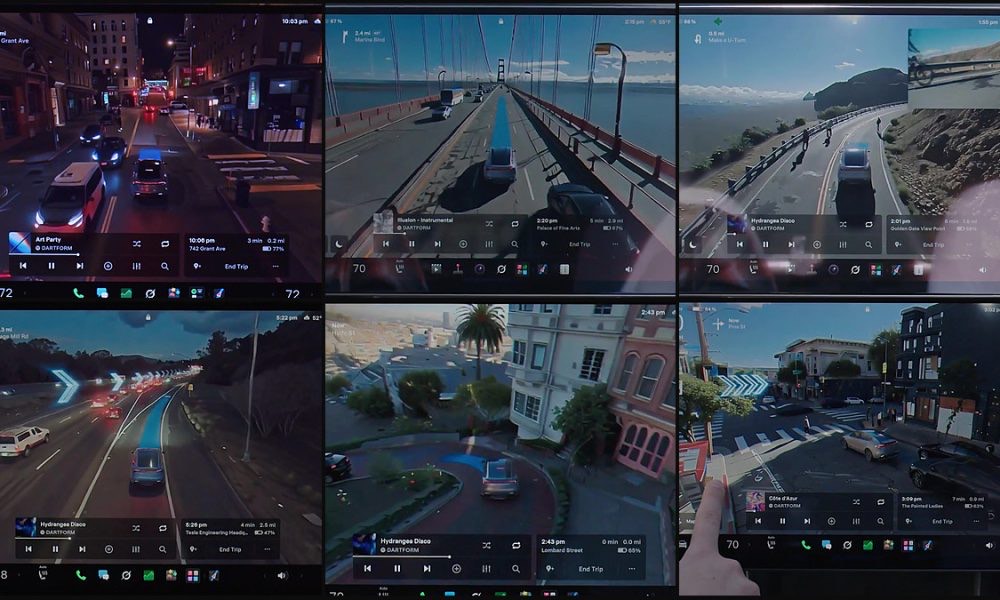
Tesla began pushing FSD (Supervised) v15.0.1, software version 2026.38.6.11, on November 21. It is the first public build of FSD v15, and Tesla’s release notes tag the driving stack, Tesla Reality View and the speed-camera slowdown as HW4 features. The third-party firmware tracker TeslaFi counted four installs and three pending on November 22, with 0% of the fleet on the build. Tesla says the update improves the critical intervention rate by 25x; it published no baseline, no test mileage and no raw intervention rate.
Key points
- One package, two labels: the 2026.38.6.11 page is titled “FSD 15”, and the release-note heading says “FSD (Supervised) v15.0.1” — the .0.1 is a patch number, not a second launch.
- First recipients: Teslarati reports the initial builds went to Early Access Program owners. Tesla has not published the list, the country list or a subscription requirement. Legacy HW3 cars get only items such as FSD Streaks in this version.
- Reality View: the car’s AI computer renders an overhead virtual view of the road in real time, with fullscreen, map, split and quiet modes. Musk says it needs no game engine and uses half of one TRIP accelerator on AI4.
Background
FSD v14 left a mixed record. Electrek’s tally has v14 arriving with hallucinations, brake stabbing and speeding; early crowdsourced data showed roughly one critical disengagement every 732 miles (about 1,180 km), later point releases regressed, and owners still supervise. In April, Musk had already said v15 would “far exceed human levels of safety” — a line Electrek noted he had used for v12 and v14 as well. The commercial groundwork is more concrete: Tesla told JPMorgan that v15 is a “step-change” built on seven core technologies, with about 40% already running in the Austin Robotaxi fleet, and Robotaxi moved to 24/7 operation in every unsupervised city this month.
The other piece of context is consolidation. v15’s vision encoder is shared by FSD, Robotaxi and Optimus, which lines up with two recent Tesla moves: Cybercab personal sales pitch the same self-driving software, and the SI accelerator roadmap splits compute planning between the car and the data center. One perception front end for three products means one pipeline for data and model iteration, not three teams training three models.
The facts
The verified version and rollout details are below; figures without another attribution come from Tesla’s release notes or the trackers’ snapshots on the day.
| Item | Detail |
|---|---|
| Software version | 2026.38.6.11 |
| FSD version | FSD (Supervised) v15.0.1 |
| Hardware | Tagged HW4; legacy HW3 cars get only FSD Streaks, UI animations and similar items |
| First recipients | Early Access Program owners; list and allocation unpublished |
| Fleet share | 0%; TeslaFi logged 4 installs, Not a Tesla App logged 5 installs that day (November 22) |
| Wide release | Musk says December, with the 2026 Holiday Update |
| Headline metric | 25x improvement in critical intervention rate (Tesla’s claim) |
| Raw data | Not published: no baseline version, no test mileage, no interventions-per-mile figure |
The version number is the first thing to get right. Not a Tesla App’s page labels 2026.38.6.11 “FSD 15”, and the release note under it is headed “FSD (Supervised) v15.0.1” — the .0.1 is the patch level of this build, not a separate product line. The note opens by saying v15 “upgrades every part of the end-to-end driving network”, then lists learned navigation that uses fleet route preferences, personalized parking options, better detection of signs, small animals, debris, potholes and standing water, speed handling by profile, and tighter Autoshift integration.
The rollout scope needs unpacking. On hardware, the release notes tag FSD v15.0.1 and Reality View as HW4, while the only items for legacy Model S and Model X are FSD Streaks and interface animations marked Intel and HW3 — which puts HW3 cars outside this round’s feature set. Tesla has not issued a separate compatibility statement, so “HW4 only” is a reading of the release notes, not an official line. On geography, ITHome reported on November 22 Beijing time that the US market goes first; English outlets published no country list. As for recipients, Teslarati says the first builds went to Early Access Program members, which is not the same as “FSD subscribers first”: a subscription is a prerequisite for using FSD, while EAP is an additional filter.
Reality View is the most shareable feature in the release and the easiest to describe incorrectly. Per the release notes it is a “real-time generative driving visualization”: the car’s AI computer renders an overhead virtual camera view of the surrounding roads, vehicles and FSD’s plan, and the driver can tap a point in the visualization to send the car there. It offers fullscreen, map and split views plus a quiet mode. Musk’s addition on X, as quoted by ITHome, is that the view is generated by real-time AI video, needs no game engine, and uses half the compute of one TRIP accelerator on AI4. That is the difference between real-time generation and a pre-rendered animation: the image is redrawn from perception, not played back from a fixed clip.
The shared encoder’s provenance matters too: that line is in Tesla’s release notes, not in Musk’s post. The note says the upgraded vision encoder is shared between FSD, Robotaxi and Optimus and was trained on millions of internet videos for better generalization and data efficiency. What is shared is the encoder layer, not a single driving policy; Robotaxi’s operational domain and Optimus’s body control still get their own post-training.
The 25x figure deserves the most caution. The release note says only “improving the critical intervention rate by 25x” — no comparison version, no road conditions, no mileage. Chinese headlines rendering this as a 25x gain in “safety critical cases” are translating Tesla’s own X post, which uses that phrase, while the release note says critical intervention rate; both wordings come from Tesla. Either way there is no baseline, mileage or interventions-per-mile figure. Electrek did a rough calculation from older data: if late v14 managed a critical intervention every couple of thousand miles, 25x implies roughly 50,000 miles (about 80,000 km) between events; the outlet had previously put the bar for a limited unsupervised service at about 10,000 miles (16,000 km). That is a reporter’s estimate, not a Tesla disclosure.
Finally, the timeline. On November 21 Musk posted that “FSD V15 goes to wide release next month” and tied it to the 2026 Holiday Update; the same afternoon, the Early Access builds started going out. The two statements do not conflict — one is about wide release, the other is the first EAP build. Reading this as “v15 has rolled out to everyone” would be wrong: the fleet share is still 0%.
What others say
Electrek’s verdict is that the critical intervention rate is the right metric for progress toward unsupervised driving, and that Tesla supplied only the multiplier, not the number being multiplied. The outlet also notes that v15’s “improved detection” is unquantified and that FSD’s history runs two steps forward, one step back: v14 shipped with hallucinations and brake stabbing, and only later point releases settled it. It adds two regulatory data points: in a Brussels test, FSD exceeded the limit in 55% of 30 km/h zones, averaging 44 km/h; NHTSA is reviewing a petition about Robotaxi speeding in school zones and has an FSD traffic-law investigation open.
Chinese tech circles read the feature through the rendering stack. A Chinese tech blogger described Reality View as “3D Gaussian full-scene reconstruction” and used it to compare chip specs across Chinese and American automakers — an outside inference, since Tesla has not said what representation the pipeline uses. ITHome supplied the hardware background: AI4 is HW4, renamed from FSD V13 onward, with CPU cores up from 12 to 20 at up to 2.35 GHz and a TRIP accelerator up from two cores to three at up to 2.2 GHz, for an estimated 300–500 TOPS, roughly five times HW3.
Owner reaction is a thin sample so far. TeslaFi and Not a Tesla App together show single-digit installs, and r/TeslaFSD produced no quotable hands-on thread on rollout day. HW3 owners’ complaint is clear enough: in the same release notes, their cars get interface features such as FSD Streaks. As for the 25x claim, no third party has reproduced it in these two days, and Electrek says plainly that it cannot be verified.
Our take
For anyone following autonomous-driving engineering, the thing to remember about v15 is the encoder merge, not Reality View. FSD, Robotaxi and Optimus sharing one vision front end means Tesla has collapsed “understanding the world” into one representation and attached different control policies behind it. That explains the three-product bet better than any single demo, and it sits on the same cost logic as Optimus being rental-first. Reality View is a different kind of statement: spending half a TRIP accelerator on real-time rendering tells owners there is compute headroom left, while fixing an interface that has drawn complaints for years.
Three honest caveats. First, the 25x number is not auditable today: no baseline, no mileage, no interventions-per-mile figure, so any citation has to say “Tesla claims”. Second, this is not a wide release; the EAP sample is in the single digits, and the real test comes from owner data after the December holiday update. Third, v15 on personal cars is still supervised — Tesla has not said this build lets private vehicles drive unsupervised, and equating a better intervention rate with “hands off the wheel” is overreading it.
For HW3 owners, the signal is blunter: new features are now gated by hardware, and software support for older cars is narrowing. For competitors, the number to watch is not the launch copy but whether independent intervention data appears after December. That is the only evidence that would make 25x stand up.
What to watch
- December: whether the holiday update takes v15 to wide release as Musk said, and which countries and models it covers.
- Four to eight weeks after rollout: fleet share in TeslaFi and Not a Tesla App, plus the first long-distance owner reports.
- Regulation: how NHTSA handles the Robotaxi school-zone petition and where the FSD traffic-law investigation goes.