Intel 18A yield hits 70%, CEO says, and Microsoft commits to EMIB packaging
Intel’s CEO said on Nov 19 that 18A yield is now 70%, without defining the metric; a day earlier Microsoft became the first company to commit to EMIB packaging.
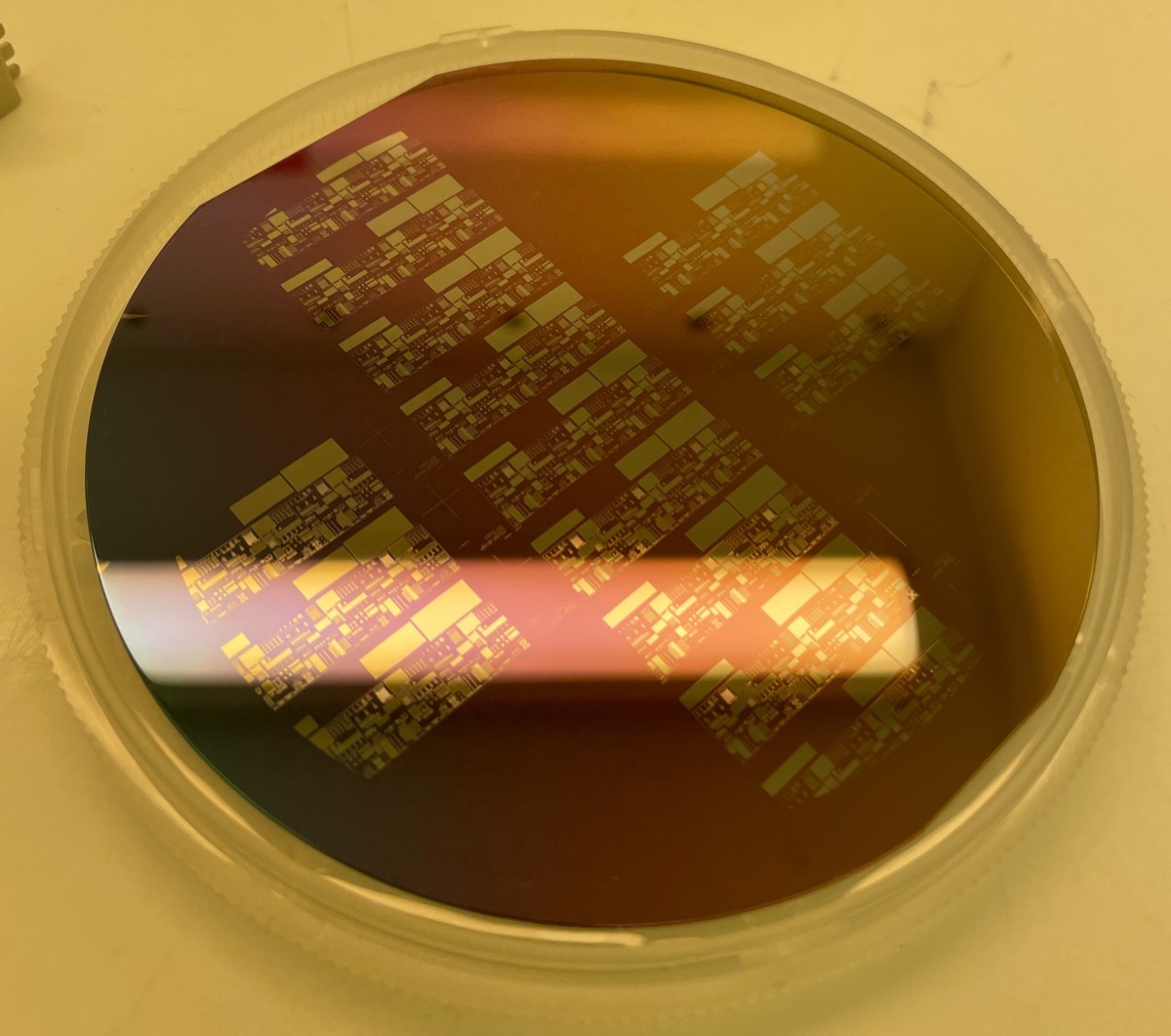
Intel CEO Lip-Bu Tan told the TomorrowX conference on Thursday, November 19, that Intel 18A yield has risen from “horrible” when he took over in March 2025 to 70% now. Tom’s Hardware, which reported the remark the same day, says he never specified which yield he meant and judges functional die yield the likeliest reading. The 70% appears in no Intel newsroom post and in no part of the company’s October 29 earnings release. A day earlier, Intel and Microsoft announced that Microsoft would be the first company to publicly use Intel Foundry’s EMIB advanced packaging, for Azure first-party silicon.
Key points
- The 70% has no definition. Tom’s Hardware says the CEO did not say whether he meant functional yield, parametric yield or the share of sellable chips, and did not name a product line. Chinese coverage of the same talk repeats that caveat.
- Microsoft is buying packaging and Xeon capacity, not 18A wafers. In the joint release posted on November 18 (dateline November 17), Microsoft is the first named customer for Intel Foundry’s EMIB packaging on Azure first-party silicon, and the deal confirms multi-year Xeon supply including Diamond Rapids. No Microsoft chip is named, and 18A does not appear anywhere in the text.
- Intel has not confirmed the number. There is no release, no 8-K and no yield figure in the Q3 results. For now the 70% exists as one spoken sentence, one trade-press report and its Chinese rewrite.
Background
18A is Intel’s 1.8nm-class node, the first to combine RibbonFET gate-all-around transistors with PowerVia backside power delivery, and the node Intel Foundry needs to sell to outside customers. It has already slipped once. The Register reported on June 3 that 18A was meant to be production-ready by late 2024 and ramping through 2025, but the first product, Core Ultra 3 “Panther Lake,” did not arrive until January 2026. Tom’s Hardware puts Panther Lake’s compute tile into 18A volume production in the second half of 2025. Intel’s explanation was that it chased performance and yield at the same time; its CFO compared the effort to flying a plane while fixing a wing.
A run of 2026 disclosures traces the curve. On April 29, Tom’s Hardware quoted Intel saying the 18A yield curve was improving faster than expected, with the CFO suggesting an end-of-year target might be reached by midyear, but no percentage. On June 3, The Register quoted Intel’s plan to reach margin-generating yields by the end of 2027, which the company called ahead of schedule. On July 3, Tom’s Hardware cited BlueFin Research saying the wafer-to-wafer yield problem was resolved and that D1X in Oregon and Fab 52 in Arizona had each ramped to 12,000–15,000 wafer starts a month. In the second-quarter results, 18A-P entered risk production and some Panther Lake parts began high-volume manufacturing on ASML’s EXE High NA EUV tools. Third-quarter foundry revenue was $6.7 billion against an operating loss of $1.853 billion, a slight improvement on the $5.8 billion and $2.089 billion loss of the second quarter.
We covered Intel’s restructuring and ownership stake in October, when the CEO was talking about the organization rather than the process. This time the process produced a number.
The facts
The quote runs to two clauses. Tom’s Hardware has it as: “When I took over [as CEO in March, 2025], 18A yield was horrible; now we are at 70%.” The bracketed date is the reporter’s insertion, not part of the remark. The same report notes that Clearwater Forest is in high-volume production, but does not tie it to the 70%.
Yield is never a single number in a fab. Tom’s Hardware explained the components in July: die yield is shaped by defect density, within-wafer variation, wafer-to-wafer variation and packaging yield, on top of parametric yield and reliability screening. Wafer-to-wafer yield describes only how consistent one wafer is with the next. A 70% functional yield answers “does this die light up,” not “how many can we sell” — the latter still has to clear frequency, power and packaging bins. A 70% sellable-die figure would be pulled down further by the mix of SKUs cut from the same wafer.
The product line is missing too. The same article names two 18A parts: Panther Lake, the Core Ultra 300-series client chip, and Clearwater Forest, an Intel Xeon 6+ server part with up to 288 cores built from 18A compute chiplets stacked with Foveros Direct 3D. Their die areas differ by roughly an order of magnitude, so the same 70% would mean very different things. Tom’s Hardware does not say which one the CEO meant.
| Date | Event | Number |
|---|---|---|
| 2026-04-29 | Tom’s Hardware quotes Intel: 18A yield curve beats forecast | No percentage |
| 2026-06-03 | The Register: 18A chased performance and yield at once | Margin-generating yields by end-2027 |
| 2026-07-03 | BlueFin via Tom’s Hardware: wafer-to-wafer issue resolved | 12,000–15,000 wafer starts/month at both fabs |
| 2026-10-29 | Intel Q3 2026 results | Foundry revenue $6.7B, operating loss $1.853B |
| 2026-11-19 | CEO at TomorrowX, per Tom’s Hardware | 18A yield 70%, metric unspecified |
The Microsoft half rests on firmer ground because it has a formal release.
| Item | What was announced |
|---|---|
| Packaging | Microsoft is the first company to announce use of Intel Foundry EMIB, for Azure first-party silicon; no chip is named |
| Xeon | Multi-year Xeon supply confirmed, including next-generation Diamond Rapids; no core counts, volumes or dates |
| Memory | Xeon 6 CXL and Flat Memory Mode, up to 2.3x on Azure M-series v4 (76 vCPU/1,764 GB vs 64 vCPU/1,007 GB, Intel’s figure) |
| Compute | First QAT-enabled Azure VMs, 2.5x faster SQL backups |
| Security | TDX confidential computing, protecting memory and register state when a VM moves hosts |
The two announcements sit next to each other in time but were not one event. Microsoft’s release went out on November 17 and was posted on both companies’ sites on November 18; the CEO spoke at TomorrowX on the 19th. Tom’s Hardware bundled them into a single story with “in addition to announcing an important 18A milestone,” which is easy to misread as a signing on the same stage.
What others say
Tom’s Hardware’s own framing is the sentence that travels: the 70% is “more or less in line with what one would expect from an all-new manufacturing technology.” Chinese coverage turned that into “in line with expectations for a new node’s ramp,” which reads like an Intel-provided curve. It is a reporter’s judgment, not company guidance. Intel has never published a percentage-based 18A yield curve; what exists is “better than expected,” “7% per month” and “margin-generating by the end of 2027.”
The 7% figure is ambiguous on its own: relative improvement or percentage points, the report does not say. Either way, Intel’s public statements stop at the trend and give neither a starting point nor an endpoint, and Tom’s Hardware does not treat the number as a conclusion.
The Register’s June reporting is colder. 18A was late because Intel chased performance and yield simultaneously, and the first product arrived a year behind plan. In the same piece Intel said 14A is further along at comparable maturity than 18A was, because it reuses gate-all-around and backside power. Read together, 70% looks like catching up to a passing grade, not catching a rival.
The business contrast comes from The Register on October 30: after the Q3 results, the shares fell from $92.96 to $70.87, a 23.7% drop, as client computing and “physical AI” revenue came in at $8.1 billion, down 5% year over year, and the CEO predicted the PC chip market would shrink 12% next year. Yield belongs to the foundry story; the revenue hole is in PCs. They are not on the same ledger.
Chinese coverage handled the caveat better than most. Mydrivers put 70% in the headline but added in the body that the CEO did not say whether the figure was functional yield, parametric yield or sellable proportion, and supplied the Panther Lake, Clearwater Forest and 14A PDK 0.9 context. The headline still reads like an official number.
Our take
The news weighs differently depending on who is reading.
For anyone buying a PC, 70% changes nothing on the shelf. Panther Lake has been on sale since January 2026 and Clearwater Forest is already in production; yield moves prices and supply, not availability.
For anyone watching the foundry, 70% is necessary but not sufficient. It says 18A’s defect density and process window are inside the range where volume shipment works. It does not say Intel’s cost is below TSMC’s, and it does not say a large outside customer will put a flagship product on the node. Intel’s own marker is margin-generating yield by the end of 2027, which carries more information than the 70%.
For anyone reading the Microsoft deal, EMIB is the part of Intel Foundry that is easier to sell right now. Intel describes it as using “a small piece of silicon embedded in the package” to connect chips at very fine pitch; it entered a production program in 2013, was made public in 2014, and is now offered to foundry customers. Microsoft putting its name first suggests it wants a second source for multi-chiplet Azure silicon. But no 18A wafer is involved in the announcement — the release does not say where Microsoft’s chips are fabricated, and it would be wrong to fill that in.
Three doubts should stay attached. First, the 70% has no denominator: which die, what area, which SKU mix. The same sentence can be good news or unremarkable. Second, it is not an official number: no release, no filing, no transcript, just a remark at a conference and one outlet’s report. Third, even if 70% is accurate, it should not be written up as “matching the industry” — there is no common public definition for where a node should be a year into ramp, so any cross-company comparison has to start by aligning definitions.
What to watch
- Whether the next earnings call puts 18A yield into the prepared remarks. Q3 did not. Guidance for the fourth quarter is $15.0–16.0 billion.
- 18A-P, which entered risk production in Q2 and is slated for Nova Lake. Whether the same yield definition carries over matters more for 2027 than the 70% does.
- 14A, whose 0.9 PDK shipped in October. The Register quotes Intel saying 14A is ahead of 18A at the same maturity, which makes 14A the likelier decider for the foundry business.
- Microsoft’s Azure silicon: model names, foundry and volume are all unpublished, so the size of the EMIB order cannot be judged yet.