Leak: Intel's Nova Lake Xeon E drops hybrid design — up to 16 pure P-cores or 32 E-cores
Leaker Jaykihn claims Intel's next edge Nova Lake Xeon E ships single core types only — up to 16 P-cores or 32 E-cores, no LPE. Intel has not confirmed it.
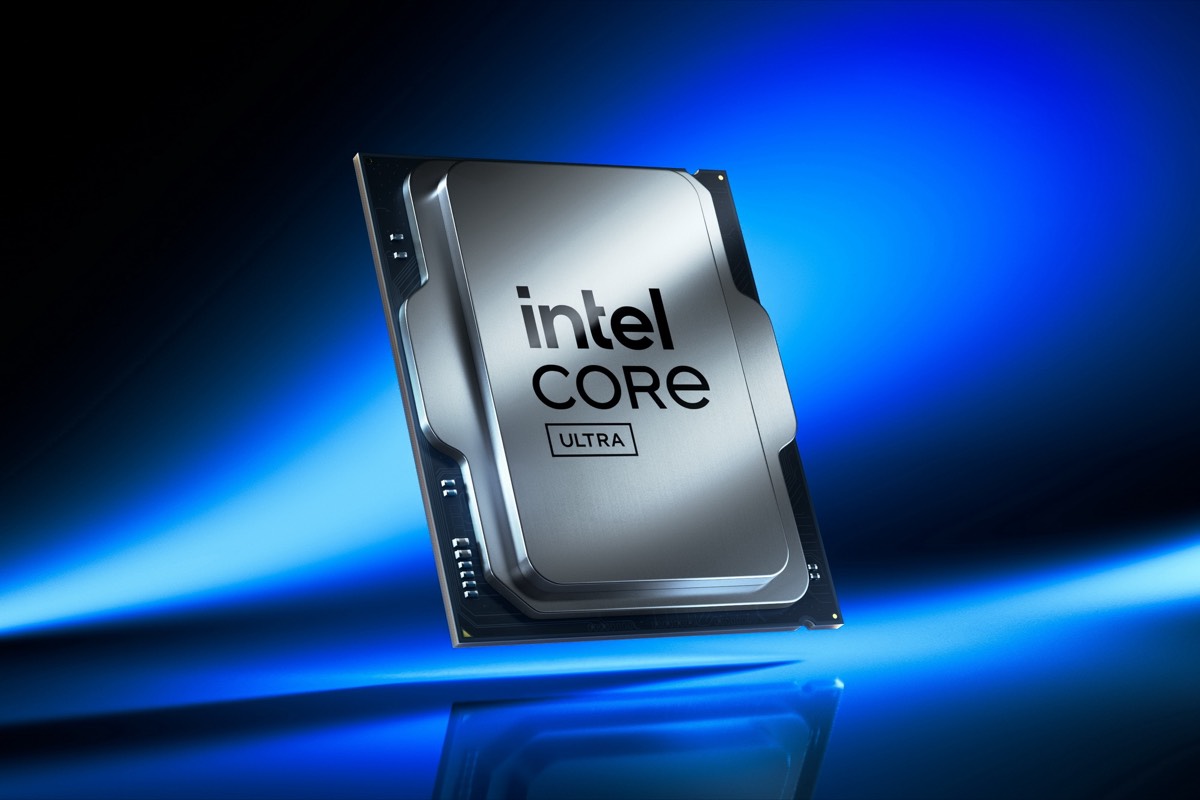
Intel’s next Xeon E line — the edge-server branch of the upcoming Nova Lake family — will reportedly abandon hybrid architecture altogether. On October 16, 2026, Jaykihn, a serial leaker of Intel’s roadmap, posted on X that the chips will be “P/E-core only, no LPe”: five all-P-core SKUs at 4, 6, 8, 12 and 16 cores, and four all-E-core SKUs at 4, 8, 16 and 32, on a new W980 chipset. Club386 asked him directly and got a reply the same day; Chinese outlet MyDrivers followed two days later with an identical SKU matrix. Intel has confirmed nothing — this story is a single-sourced leak, and we treat it as one throughout.
Key points
- Nine SKUs, two shapes: the leak describes five all-P-core Xeon E parts (4/6/8/12/16 cores) and four all-E-core parts (4/8/16/32), with no LPE low-power efficiency cores anywhere in the stack.
- The leaker answered follow-ups: asked by Club386 what hybrid-minded edge customers should buy, Jaykihn replied “regular Nova Lake-S” — the desktop chips. The precedent is Bartlett Lake, which went all-P-core and topped out at 12.
- One source, zero confirmation: every number traces to Jaykihn alone. MyDrivers’ desktop context (Q1 2027, LGA1954, Core Ultra 4000, up to 144 MB of L3, NPU at 73 TOPS) comes from the same rumor chain.
The leak
Jaykihn’s original post, dated October 16, runs four lines: the target is “Nova Lake for Edge, Xeon E”; the rule is “P/E-core only, no LPe”; the SKUs are “4/6/8/12/16P or 4/8/16/32E”; and the chipset is named W980.

Putting the two outlets’ accounts side by side:
| Shape | SKUs and core counts | Source |
|---|---|---|
| All P-core | 4 / 6 / 8 / 12 / 16 cores — five parts | Jaykihn’s post, Club386, MyDrivers |
| All E-core | 4 / 8 / 16 / 32 cores — four parts | Jaykihn’s post, Club386, MyDrivers |
| Chipset | W980 | Jaykihn’s post, Club386 |
Why drop the LPE cores? MyDrivers (author Heibai) argues the die space that E-cores and low-power tiles free up goes into more P-cores, and that edge workloads rarely carry background light threads, so a uniform core type schedules cleanly. Edge customers who do want hybrid silicon get pointed at desktop Nova Lake-S instead. Note that W980 appears only in Jaykihn’s post and Club386’s coverage — MyDrivers doesn’t mention it.
Background
Xeon chips have historically stuck to one core type per part, as Club386 lays out; the hybrid design — P-cores plus E-cores, with an extra layer of LPE low-power cores on client chips since Meteor Lake, the first Core Ultra generation — lives on the desktop and mobile side. The edge precedent is Bartlett Lake: built on Raptor Lake with E-cores removed, all P-core, topping out at 12 cores against 8 on the contemporary desktop. So “no hybrid in edge Xeon” is not a new decision inside Intel; what the leak adds is that the next generation stays homogeneous and pushes an all-E-core shape to 32 cores for the first time.
On the desktop side, MyDrivers uses Nova Lake-S as the reference point: expected in Q1 2027 on a new LGA1954 socket as Core Ultra 4000, hybrid (Panther Cove P-cores plus Darkmont E-cores) with up to 28 cores on a single compute die, three BFC variants reaching up to 144 MB of L3 to counter AMD’s X3D parts, and an NPU leak of 73 TOPS against Arrow Lake’s 13. Those surrounding numbers are rumor-chain material too, not official. Intel’s server business, meanwhile, is mid-turnaround — CEO Lip-Bu Tan put the restructuring at about 80% done in an October 17 Nikkei interview we covered.
What others say
Club386 (Ben Hardwidge, October 16 at 16:23 BST — two days ahead of MyDrivers) frames the entire piece around “If this leak is true,” calls Jaykihn a “regular and often reliable” Intel leaker, and publishes the verification exchange. Asked directly, Jaykihn wrote: “Edge customers looking for hybrid products would purchase regular Nova Lake-S.”

MyDrivers ran its story on October 18 at 23:57 (byline Heibai). Its SKU numbers match Club386’s exactly — we found no conflicts between the two. Both outlets cite the Bartlett Lake precedent; Club386 alone brings the W980 chipset name and the single-core-type Xeon tradition, MyDrivers alone the desktop context and the die-space argument. Two verification notes. We opened both X posts directly and read the full text without signing in — the four-line original, and the reply to Club386 (“Edge customers looking for hybrid products would purchase regular Nova Lake-S”); their timestamps, October 16 at 14:24 and 14:49 UTC, agree with Club386’s quotation. And on the Chinese side we found no independent second report this round; MyDrivers is the only one.
Our take
The people who should care run capacity, not gaming rigs. Under a hybrid design, “one core” comes in two flavors, and schedulers, licensing and capacity models all have to price P-cores and E-cores separately. If edge Xeon E really ships homogeneous across the line, core counts align directly with thread models and capacity baselines — the same instinct behind Microsoft standardizing inference on its own homogeneous Maia 300 accelerator and AWS judging AI server purchases on a sub-three-year payback: make a unit of compute predictable enough to schedule. A 32-core all-E shape is worth flagging on its own — if real, it would let an edge chassis trade single-thread speed for E-core density, an option today’s Xeon E lineup doesn’t offer.
The honest catch: it all rests on one leaker. The previous edge Xeon E generation was already all-P-core, so the precise claim is less “Intel abandons hybrid” and more “edge stays homogeneous, and E-core shapes extend to 32 cores.” None of the nine SKUs, the W980 name, or the timing has official backing. The one-minute check: open Club386’s embedded post screenshot — or the two screenshots in this article — and compare 4/6/8/12/16P, 4/8/16/32E and the name W980. What to watch next is Intel’s official disclosure alongside desktop Nova Lake-S, expected in Q1 2027, when the server and edge SKUs should surface together.